
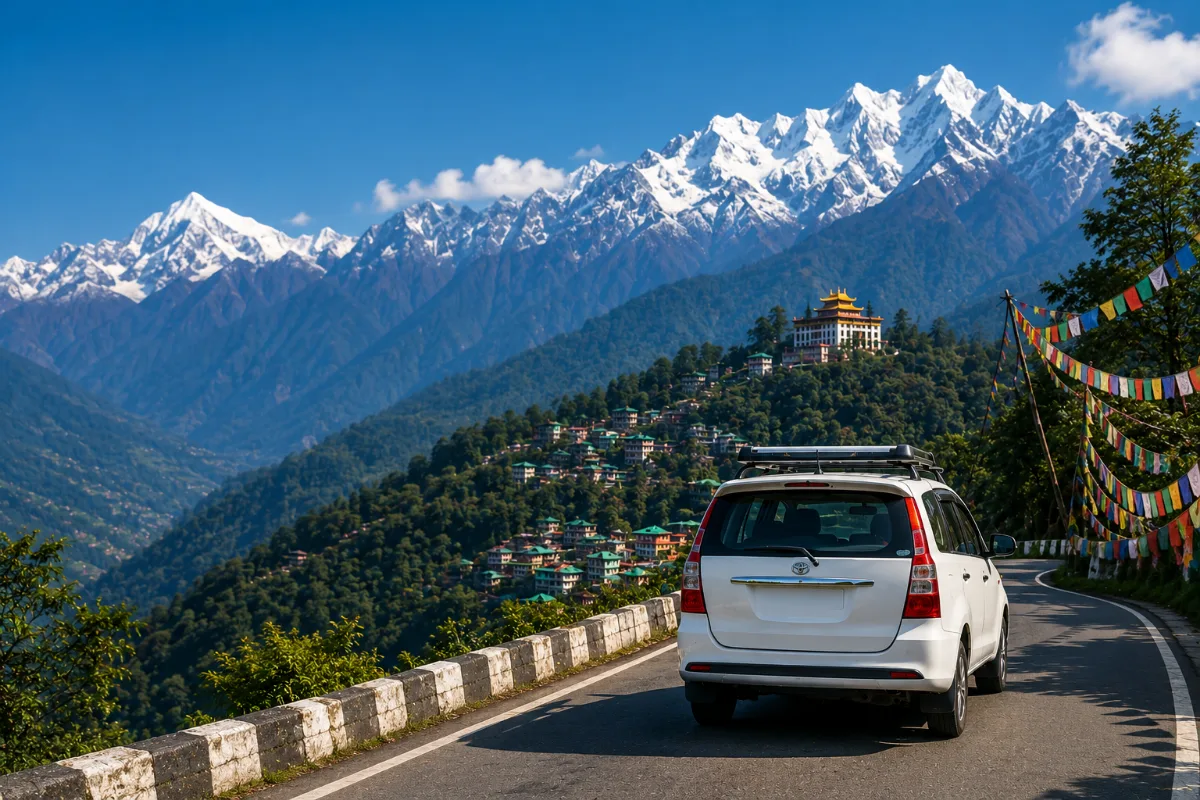
Best Time to Visit Sikkim: A Complete Month-by-Month Travel Guide
Sikkim is one of those rare destinations where there isn't really a bad time to visit.
The mountains change character with the seasons. Spring brings blooming rhododendrons and clear mountain landscapes, summer offers comfortable sightseeing weather, the monsoon transforms the hills into a deep green paradise, and autumn brings some of the clearest Himalayan views of the year. Winter, meanwhile, brings cold weather, snow in higher areas, and a completely different side of Sikkim.
But if you're planning your first trip, one question usually comes first:
What is the best time to visit Sikkim?
For most travellers, March to May and October to mid-December are among the best periods for a Sikkim trip. The official Sikkim Tourism department also highlights spring and autumn as particularly favourable seasons, with spring known for blooming landscapes and autumn for clearer Himalayan views.
However, the best month for you depends on what you actually want to experience.
Want clear views of the Himalayas? Want to see snow? Want flowers and pleasant weather? Want fewer tourists? Want to explore North Sikkim?
This guide breaks down Sikkim weather and travel conditions month by month so you can choose the right time for your trip.
Quick Answer: When Is the Best Time to Visit Sikkim?
If you want the short answer:
Best overall: March to May and October to mid-December
Best for flowers: March to May
Best for clear Himalayan views: October to mid-December
Best for snow: December to February, depending on altitude and local conditions
Best for lush green landscapes: Monsoon months, although travel can be more unpredictable
Best for fewer crowds: Selected monsoon periods and winter, depending on your destination
Sikkim has dramatic variations in climate because of its altitude. The official tourism department notes that the state ranges from subtropical valleys to snow-bound alpine areas, meaning weather can be very different between Gangtok and higher destinations such as North Sikkim.
Sikkim in March: Spring Begins
March is one of the most attractive months to start exploring Sikkim.
The coldest part of winter begins to ease, and lower and middle-altitude areas become more comfortable for sightseeing.
This is also the beginning of Sikkim's famous spring season.
Why visit Sikkim in March?
- Pleasant sightseeing weather
- Beginning of the flowering season
- Beautiful mountain landscapes
- Good time for exploring Gangtok and surrounding areas
- Fewer extreme-weather conditions than peak winter
If you're interested in nature and photography, March can be an excellent choice.
Higher areas can still be very cold, however, so don't assume that Sikkim has one uniform temperature.
Sikkim in April: One of the Best Months for Nature
April is arguably one of the most beautiful months to experience Sikkim.
Spring is in full swing, with colourful flowers appearing across parts of the state. Sikkim Tourism specifically highlights March to May as a prime spring period for blooming flora.
This makes April particularly attractive for:
- Nature lovers
- Photographers
- Couples
- Families
- First-time visitors
- Sightseeing trips
Gangtok is particularly pleasant during this period, while surrounding destinations offer different landscapes and experiences.
If you want a combination of pleasant weather, greenery, flowers and sightseeing, April is a strong choice.
Sikkim in May: Great for Summer Travel
May is another popular month for visiting Sikkim.
Temperatures remain relatively comfortable in many inhabited areas, while the higher mountains remain dramatically cooler.
The official Sikkim Tourism climate guide describes spring temperatures broadly in the comfortable range, although actual conditions vary significantly by altitude and location.
May is a good month for travellers who want to combine:
- Gangtok sightseeing
- Monastery visits
- Mountain viewpoints
- Nature experiences
- Longer road journeys
- Higher-altitude excursions where conditions permit
If you're planning a family holiday during school vacation periods, it is wise to arrange accommodation and transportation in advance.
Sikkim in June: Beautiful but More Weather-Dependent
June marks the transition toward the wetter part of the year.
The landscape becomes increasingly green, and waterfalls and streams can become especially impressive.
However, rain can also make mountain travel less predictable.
If you're travelling in June, keep your itinerary flexible.
Avoid planning extremely tight connections between road journeys, flights and trains. Mountain weather can affect travel times, and road conditions can change.
Sikkim in July and August: The Monsoon Experience
July is generally one of the wettest months in Sikkim.
The official Sikkim Tourism department notes that rainfall is heavy and well distributed from May to early October, with July being the wettest month in most places.
So, is Sikkim worth visiting during the monsoon?
Yes—but it depends on what you want.
The advantages
- Extremely green landscapes
- Waterfalls and streams at their best
- Fewer tourists in some places
- Potentially lower accommodation costs
- Beautiful misty mountain scenery
The disadvantages
- Heavy rainfall
- Possible road disruptions
- Longer travel times
- Reduced visibility
- Changes to sightseeing plans
If your priority is perfect mountain views and predictable road travel, monsoon is not usually the first choice.
If you love green landscapes, clouds, waterfalls and quieter travel, it can be rewarding.
Sikkim in September: The Landscape Starts Changing
September can be an interesting transition month.
The monsoon gradually begins to retreat, although rainfall can still occur.
The hills remain intensely green, while conditions can become increasingly favourable for travel as the month progresses.
However, don't treat September as guaranteed dry weather.
Mountain weather doesn't follow a strict calendar, so always check current conditions before travelling.
Sikkim in October: One of the Best Months to Visit
October is one of the strongest choices for a Sikkim holiday.
The monsoon season has generally eased, and clearer skies can return.
Sikkim Tourism identifies October to mid-December as one of the state's standout travel windows because of crisp weather and clearer Himalayan views.
October is especially attractive for:
- Himalayan photography
- Mountain views
- Family holidays
- Couple trips
- Sightseeing
- Road trips
- Exploring Gangtok and surrounding destinations
If you're visiting Sikkim for the first time and don't have a specific seasonal goal, October is an excellent month to consider.
Sikkim in November: Clear Mountain Views
November is another excellent month for travellers who want spectacular Himalayan scenery.
The skies can be beautifully clear, making this a popular period for photography and mountain viewpoints.
The weather is cooler, particularly in the evenings and at higher elevations, so pack warm clothing.
November works particularly well for travellers who want a balance between:
clear skies + comfortable sightseeing + mountain scenery.
Sikkim in December: Winter Arrives
December marks the beginning of the winter experience.
Temperatures drop considerably, particularly at higher elevations.
Snowfall is possible in higher areas, although exactly where and when snow appears depends on weather and altitude.
The official Sikkim Tourism department describes January to March as the core winter period, with sub-zero nights and snow covering many areas.
December is therefore a good choice if you're looking for:
- Cold mountain weather
- Winter landscapes
- Festive atmosphere
- A quieter holiday
- The possibility of experiencing snow
But don't book a Sikkim trip solely on the assumption that it will snow in Gangtok on your chosen dates.
Snowfall is highly location- and weather-dependent.
Sikkim in January: For the Winter Lover
January is cold.
Very cold in some places.
The higher parts of Sikkim can experience severe winter conditions, while Gangtok and other inhabited areas remain more accessible but still chilly.
This is the season for travellers who genuinely enjoy winter.
If your dream Sikkim holiday involves:
- Cold mornings
- Snow-covered landscapes
- Warm cafés
- Mountain views
- Winter photography
January can be memorable.
Just pack properly.
Sikkim in February: Winter Continues
February remains cold, particularly at higher elevations.
Snow conditions can still exist in higher destinations, but access and local conditions vary.
For travellers primarily interested in Gangtok, monasteries, cafés, local culture and sightseeing, February can be quieter than the peak holiday periods.
For high-altitude destinations, however, always check current accessibility before planning your itinerary.
What Is the Best Month to Visit Sikkim?
If we had to narrow it down:
Best overall: October
Excellent balance of weather, mountain visibility and sightseeing conditions.
Best for flowers: April
Spring landscapes and blooming flora make this a beautiful time for nature lovers.
Best for clear mountain views: November
Cooler weather and clearer skies can create excellent Himalayan photography conditions.
Best for snow: January and February
Higher areas are more likely to offer winter snow experiences, depending on current conditions.
Best for greenery: July to September
The landscape is at its lushest, but rainfall can make road travel less predictable.
Best Time to Visit Gangtok
Gangtok is the most common base for travellers exploring Sikkim.
For a first visit, March to May and October to December are generally the easiest periods to plan around.
Spring offers pleasant weather and flowering landscapes.
Autumn and early winter offer cooler weather and potentially clearer mountain views.
Gangtok itself can be visited throughout the year, but the ideal month depends on what you want from the trip.
Best Time to Visit North Sikkim
North Sikkim is different.
Destinations such as Lachen, Lachung, Yumthang and surrounding high-altitude areas have very different weather from Gangtok.
Road conditions, permits and accessibility can vary by season.
Certain protected areas require permits, and the Sikkim Tourism Department maintains specific rules for destinations such as Yumthang, Yumesamdong, Thangu and Gurudongmar.
For this reason, don't plan a North Sikkim trip based solely on a generic "best time to visit Sikkim" recommendation.
Check the current local situation before booking.
Best Time to Visit Tsomgo Lake and Nathula Pass
Tsomgo Lake and Nathula Pass are among the most popular high-altitude excursions from Gangtok.
However, these are not ordinary sightseeing destinations.
They are located at high altitude and are subject to specific permit and vehicle requirements.
According to the Sikkim Tourism Department, Nathula Pass is a protected area destination for domestic tourists and requires the relevant permit through the prescribed process. Foreign nationals are not permitted to visit Nathula.
The department also notes that Tsomgo Lake is within a protected area and requires the relevant permit arrangements.
Because conditions can change, travellers should confirm current permit requirements and accessibility before travelling.
Do You Need a Taxi in Sikkim?
For most visitors, transportation is one of the most important parts of planning a Sikkim trip.
Unlike a typical city holiday, many of Sikkim's most beautiful destinations are connected by winding mountain roads.
Travellers commonly use:
- Shared taxis
- Private cabs
- Scheduled transfers
- Local sightseeing vehicles
- Tour vehicles
Your choice depends on your budget, group size and itinerary.
A solo traveller may prefer a shared ride.
A family with children and luggage may prefer a private cab.
A group of friends may find a private vehicle more convenient.
Why Pre-Book Your Sikkim Taxi?
One of the easiest ways to reduce travel stress is to arrange important transportation before your trip.
This is particularly useful when travelling during:
- School holidays
- Long weekends
- Festival periods
- Peak tourist seasons
- Airport arrival days
Instead of arriving in the region and starting your search from scratch, you can plan your transportation around your itinerary.
That's where MoCabs comes in.
Travel Across Sikkim with MoCabs
MoCabs is built around the way people actually travel across Sikkim and North Bengal.
Whether you're arriving at Bagdogra Airport, travelling from NJP to Gangtok, moving between Sikkim's major destinations, or looking for a private vehicle for your holiday, MoCabs brings transportation options together in one platform.
Depending on the route and availability, travellers can choose between shared seats and private cab options.
The goal is simple:
Make mountain transportation easier to plan before you start your journey.
How to Plan Your Sikkim Trip Around the Seasons
Here's a simple way to choose your travel dates.
If you love flowers
Plan for March to May.
If you want clear Himalayan views
Consider October to mid-December.
If you want snow
Look at December to February, particularly higher-altitude destinations, while checking current conditions.
If you love lush green mountains
Consider the monsoon season, but build flexibility into your itinerary.
If you're travelling with family for the first time
Spring or autumn is usually the easiest starting point.
What to Pack for Sikkim
Your packing list should depend on the season and altitude.
However, a few things are useful almost year-round:
- Comfortable walking shoes
- Warm layers
- A waterproof jacket
- Sunglasses
- Sunscreen
- Personal medicines
- Reusable water bottle
- Power bank
- Government-approved identification documents
- Extra layers for high-altitude trips
If you're heading to very high destinations, don't underestimate the cold.
A sunny afternoon in Gangtok does not mean the same conditions will exist several thousand feet higher.
A Note About High-Altitude Travel
Some of Sikkim's most famous attractions are at significant elevations.
If you're travelling to high-altitude destinations, take the conditions seriously.
Give yourself time to adjust, stay hydrated and avoid rushing through the itinerary.
If you feel unwell at altitude, don't simply assume it's normal.
For high-altitude excursions, follow local guidance and seek medical assistance if symptoms are concerning.
Is Sikkim Worth Visiting in the Off-Season?
Absolutely.
The phrase "off-season" can be misleading.
For one traveller, the perfect trip means crystal-clear Himalayan views.
For another, it means misty forests, waterfalls and quiet roads.
For another, it means snow.
The best time to visit Sikkim isn't necessarily the month with the most tourists.
It's the month that matches your reason for going.
Final Verdict: When Should You Visit Sikkim?
For most first-time visitors, we'd recommend starting with:
March to May for spring, flowers and comfortable sightseeing.
Or:
October to mid-December for crisp weather and clearer Himalayan views.
If snow is your priority, consider the winter months and focus on destinations where snow is actually likely based on current conditions.
And if you don't mind rain, Sikkim's monsoon landscape can offer an entirely different experience.
There is no single "perfect" Sikkim.
There are different versions of Sikkim waiting for you in every season.
All you need to decide is which one you want to see.
Frequently Asked Questions
What is the best time to visit Sikkim for the first time?
March to May and October to mid-December are excellent choices for first-time visitors because they generally offer favourable conditions for sightseeing and mountain views.
Which month is best for Sikkim snowfall?
December through February offers the strongest winter experience, particularly at higher elevations. Actual snowfall depends on location and weather conditions.
Is Sikkim safe to visit during monsoon?
Sikkim can be visited during the monsoon, but heavy rainfall can affect mountain roads, visibility and travel times. Build flexibility into your itinerary and check local conditions before travelling.
Which is better for Sikkim: April or October?
Both are excellent but offer different experiences. April is better suited to travellers interested in spring landscapes and flowers, while October is generally better for clearer mountain views.
What is the best time to visit Gangtok?
March to May and October to December are among the most popular periods for visiting Gangtok, depending on whether you prefer spring landscapes or clearer autumn and winter views.
Can I visit North Sikkim throughout the year?
Not necessarily. High-altitude destinations can have seasonal accessibility, weather restrictions and permit requirements. Always check current conditions before planning a North Sikkim itinerary.
Do I need permits for places like Nathula Pass and Tsomgo Lake?
Yes, protected-area destinations in Sikkim have specific permit requirements. The exact process depends on the destination and traveller category, so check the latest requirements before your trip.
Plan Your Sikkim Journey with MoCabs
From your first airport transfer to your final ride back to Bagdogra or NJP, getting around Sikkim should be part of the adventure—not the source of your stress.
Explore available shared taxi and private cab options with MoCabs and plan your mountain journey with confidence.
MoCabs — Your Journey, Our Priority.